The Halo and the Hand Saw: What 'Angels of Bataan' Hid About Siege Nursing
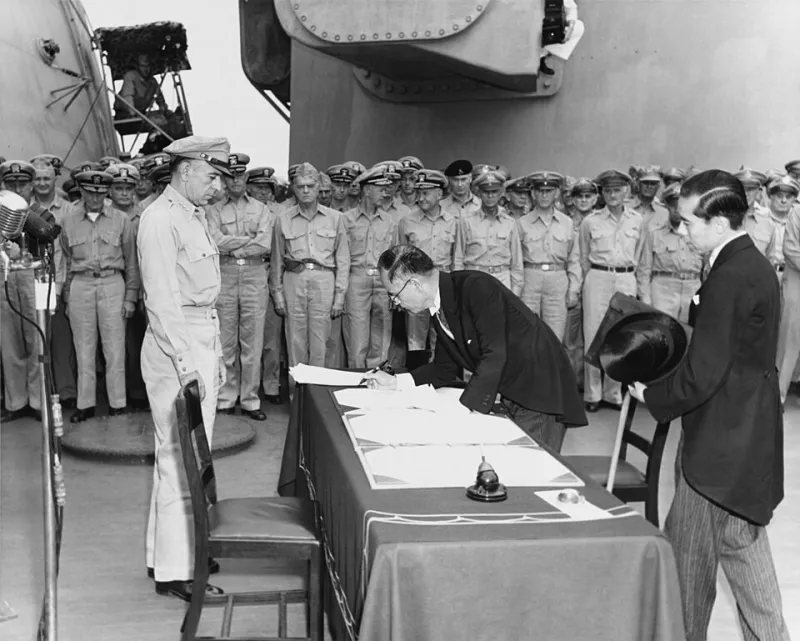
Photo: Army Signal Corps photographer LT. Stephen E. Korpanty; restored by Adam Cuerden, Public domain, via Wikimedia Commons
The phrase 'Angels of Bataan' arrived before the facts did. It was a home-front comfort, a way of describing women under fire without describing what they actually did with their hands. For PacificWar Animated, the more useful question is not whether the nurses of the Philippines campaign were heroic. It is what heroism looked like when the supply line was gone, the ward was a clearing in the jungle, and the next air raid was already audible.
A Hospital That Kept Moving
When Japanese forces invaded the Philippines in December 1941, the U.S. Army's medical establishment there was never designed for a siege. On Bataan, care was organized around two general hospitals: No. 1 at Limay and No. 2 at Cabcaban. In our animated reconstruction, the first thing that becomes clear is that neither was a fixed institution. Wards were open-air arrangements under trees; patients lay on cots or blankets; blackout discipline governed every lamp. As bombing intensified, sections of the hospitals displaced, and the map of care became a map of relocations.
That spatial story matters because siege medicine is largely a story of distance. How far was the dressing station from the ward? How far was the ward from water? Which road could still carry a truck, and which could carry only a stretcher? Animation is unusually good at making such questions visible: we can show a hospital's footprint shrinking as the front line approaches, or a supply route lengthening by a few hundred yards that cost hours. The nurses' war, in this rendering, was not a single dramatic tableau. It was a sequence of moves.
Medicine Without a Supply Line
The clinical picture on Bataan was not dominated by battle wounds alone. Malaria, dysentery, malnutrition, and exhaustion filled the wards alongside casualties. Quinine ran short; sulfa drugs were precious; morphine had to be rationed. Sterilization often meant boiling what could be boiled. Nurses functioned as triage officers, wound-care specialists, anesthetists, and record keepers, frequently while holding a flashlight for a surgeon because the generator could not be spared.
This is where the 'angel' framing becomes not merely sentimental but misleading. An angel does not count morphine syringes. A nurse does. An angel does not decide which of two badly wounded men receives the last dose of a drug; a nurse, standing in for an absent physician, may have to. Our reconstruction deliberately emphasizes depletion: a shelf of supplies emptying week by week, a ward filling faster than it can be cleaned, a patient load rising while the ration count falls. The nurses' competence was logistical and clinical, not ethereal.
The Press Release and the Halo
The 'Angels of Bataan' label was, in part, a product of wartime public relations. Home-front newspapers needed a recognizable female figure in a distant campaign, and the nurses supplied one. Hollywood soon followed, with 1943 films that turned the Philippines hospitals into melodrama. The nurses themselves were not silent: First Lieutenant Juanita Redmond's memoir 'I Served on Bataan' appeared in 1943 and described exhaustion, filth, fear, and improvised care in plain terms. But Redmond was evacuated before the surrender, and her account ends where the captivity began. The most widely consumed version of the story therefore stopped at the threshold of the hardest part.
Censorship compounded the problem. Exact locations, losses, and conditions were withheld during the war, and the nurses' own letters and reports were filtered. The halo was a way of praising without describing. It honored the women while subtly demoting them from commissioned medical professionals to symbols of American sacrifice. In an animated format, we can show both layers at once: the ward as it was, and the caption as the public read it.
Captivity and the Second Silence
When Bataan fell on 9 April 1942, the remaining hospitals were evacuated to Corregidor. When Corregidor surrendered on 6 May, 77 U.S. Army nurses became prisoners of war, along with a smaller group of Navy nurses. Interned first at Santo Tomas in Manila and later, for some, at Los Baños, they continued to nurse under guard, treating fellow internees with dwindling medicine and inadequate food. The February 1945 Los Baños raid brought liberation, but not a clean ending.
Postwar silence followed. Many of the nurses declined interviews or spoke only briefly; official histories tended to treat them as color rather than as a subject. Recognition came slowly and unevenly. The 'Angels' label persisted in commemorations precisely because it was easier to repeat than the details: the diarrhea wards, the bedpan shortages, the funerals conducted at night.
Animating the Record, Not the Legend
Our reconstruction does not attempt to recover every detail; the record is uneven, and animation should not pretend otherwise. Where sources conflict, we mark the uncertainty rather than smoothing it. What animation can do is restore proportion. It can show that the nurses' achievement was not a single act of endurance but a daily balance of clinical judgment and scarcity management, sustained across months and then across years of captivity.
The halo, in the end, is a smaller thing than the truth. The women who kept those wards alive were not ethereal visitors to the Pacific War. They were officers, clinicians, and administrators who worked with hand saws, boiled instruments, and diminishing stores. To animate them accurately is to set the halo aside and look at the hands.