Reel vs. Record: Five Pacific War Myths Hollywood Still Sells
American viewers often meet the Pacific War through movies first and maps second. That is not a failure of curiosity; it is a feature of popular culture. Films give faces to events that were too large to see whole. But when screen shorthand hardens into public memory, the result is a set of myths that feel like history because they are familiar.
At PacificWar Animated, our short animated sequences are built to test those myths against the archival record. The goal is not to scold moviegoers. It is to show where dramatization ends and documented history begins. Here are five persistent examples.
Myth 1: Pearl Harbor Was a Complete Surprise
The movies love the image of a peaceful Sunday morning shattered without warning. The record is more complicated. American radar operators detected an approaching flight and reported it; the warning was discounted. A destroyer reported a submarine contact near the harbor entrance. The information existed, but it did not move through the chain of command fast enough or in a form that produced action.
Our animated map sequence shows the timing of those warnings against the actual approach of the Japanese aircraft. It makes clear that surprise was not the absence of evidence. Surprise was the failure to convert evidence into readiness. That distinction matters because it turns Pearl Harbor from a story about omniscient attackers into a story about command, communication, and peacetime assumptions.
Myth 2: Island Hopping Meant Taking Every Island
Hollywood often presents the Pacific advance as a long chain of beaches, each one stormed in sequence. In practice, island hopping was selective. American planners bypassed strongpoints, cut supply lines, and seized positions that supported the next leap. Rabaul and Truk became enormous Japanese bases that were neutralized rather than assaulted directly. The animation of the Central Pacific drive shows a network of bypasses and airfield seizures, not a tidy staircase.
That does not make the fighting less costly. It makes the strategy more recognizable. The Pacific War was as much an engineering and logistics contest as a series of infantry charges. Seabees, supply ships, and airfield construction often mattered more than a dramatic beach assault. Movies prefer the beach because it is visual. The animated record prefers the map because it explains the campaign.
Myth 3: Kamikaze Were Simply Suicidal Chaos
Popular films often reduce kamikaze tactics to a single image: a pilot screaming toward a ship. The historical record shows an organized campaign with escorts, specialized aircraft, planned approach routes, and psychological objectives. Japanese planners understood that they could not sink enough American ships through conventional attacks. They sought to inflict casualties, damage morale, and disrupt the invasion timetable.
Our animation treats kamikaze tactics as a system rather than a mood. It shows the vulnerability of picket destroyers, the role of combat air patrol, and the difference between a hit on a carrier and a hit on a transport. The tactics were desperate, but they were not incoherent. Recognizing that organization does not glorify the strategy. It explains why the U.S. Navy responded with new radar pickets, fighter direction, and defensive screens.
Myth 4: The Atomic Bombs Alone Ended the War
The mushroom clouds over Hiroshima and Nagasaki are the most cinematic ending possible. They are not the whole ending. Between the atomic attacks and the Japanese surrender came the Soviet declaration of war, the invasion of Manchuria, the continued naval blockade, and the firebombing of Japanese cities. Emperor Hirohito's intervention broke a deadlock within the Japanese government. The timing of those events shaped the decision.
Our animated timeline places the atomic bombings inside a crowded final month rather than at the end of a single causal arrow. It asks viewers to distinguish between the most destructive weapon and the only factor in a surrender. That is not a revisionist trick. It is a basic historical habit: multiple pressures, ambiguous records, and human decisions inside institutions.
Myth 5: One Hero Usually Wins the Battle
Movies need a protagonist. Battles need systems. The Pacific War was won by codebreakers, radar operators, damage-control crews, submarine commanders, logistics officers, and thousands of sailors whose names never appear on a poster. The lone-hero framing is satisfying, but it obscures the dependence of combat on supply, intelligence, and coordination.
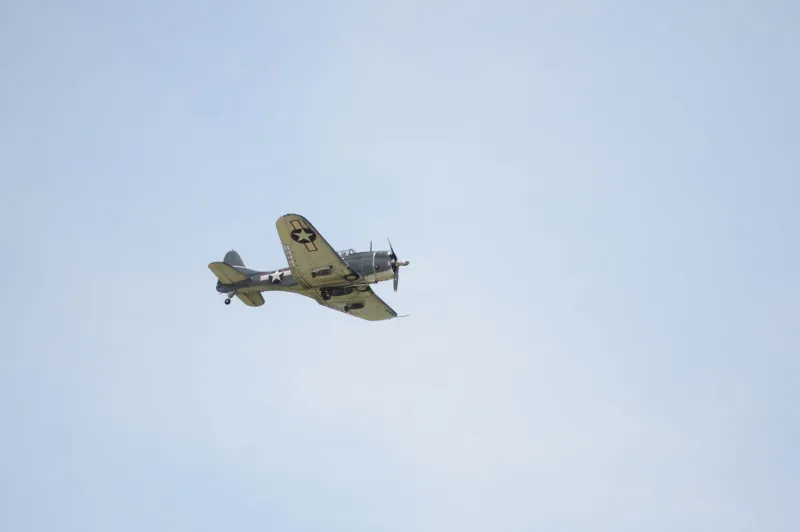
Our animated sequences often zoom out from the cockpit to the task force and then to the supply chain. That scale shift is the corrective. A dive-bomber crew can be brave and skilled, but it still needs fuel, a working radio, and a carrier that can recover it. The myth of the lone hero is not false because individuals did not matter. It is false because individuals mattered inside networks they did not control.
Why the Animated Record Matters
None of these corrections make the Pacific War less dramatic. They make it more legible. Hollywood gives us the emotional entry point: the fear, the noise, the sacrifice. The animated record gives us the structure beneath it: the timing of warnings, the shape of campaigns, the organization of desperate tactics, and the crowded causality of surrender.
PacificWar Animated does not ask viewers to forget the movies. It asks them to watch with a map open. When the familiar scene ends, the animated evidence begins.