When the Sea Lanes Went Silent: Animating the Aerial Mining of Japan
Animated histories of the Pacific War tend to gravitate toward spectacle: the burning hangar, the falling bomber, the carrier turning into the wind. The B-29 mining campaign offers almost none of that. Its decisive moments were plotted in shipping offices, harbor approaches, and minefields that could not be seen from a cockpit. That is precisely why it deserves animation. The campaign’s power lay in systems—routes, tonnage, closure, and delay—and systems become legible when they are mapped over time.
A Campaign Hidden in Plain Sight
Operation Starvation, the U.S. aerial mining effort against Japan, is often treated as a footnote to the fire raids. The comparison is misleading. Incendiary bombing attacked cities; mining attacked the connective tissue that kept cities, factories, and armies supplied. A sunken freighter was not merely a ship lost. It was a shipment of coal that did not arrive, a ferry schedule that collapsed, a port authority forced to reroute traffic through already crowded channels.
For an animated explainer, the central design problem is visualization. A mine is small, silent, and usually invisible. The remedy is to animate the consequences rather than the object: shipping lanes narrowing, port icons dimming, rail yards filling with undelivered cargo, and repair crews working against a calendar that never stops. The viewer sees not an explosion but a closing door.
The Mechanics of a Minefield From the Air
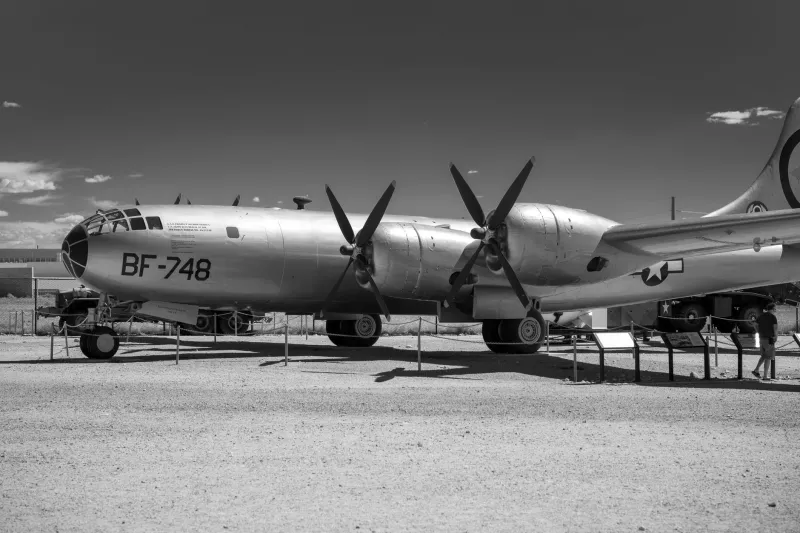
The campaign was a collaboration between land-based air power and naval mine warfare. B-29s of the 313th Bomb Wing, operating under XXI Bomber Command, carried naval mines into Japanese waters. The crews often flew at night and at lower altitudes than the fire-raid formations, using radar and careful navigation to place mines in precise fields. The mines were not random hazards. They were influence mines designed to respond to a ship’s magnetic, acoustic, or pressure signature, and they were laid in patterns meant to force traffic into predictable channels.
Animation can make this geometry clear. A single mine is a dot; a field is a polygon; a port approach is a funnel. When those three layers are combined with a timeline, the campaign stops looking like scattered sorties and starts looking like a blockade being drawn in the water.
Port by Port, Week by Week
The first major mining mission struck the Shimonoseki Strait on March 27, 1945. The strait was a natural target: it controlled movement between the Inland Sea and the outside world, and it carried traffic that could not easily be shifted to rail. Subsequent missions extended the effort to the approaches of Kobe, Osaka, Nagoya, Tokyo, Yokohama, and other ports. The sequence matters. A port-by-port animation shows that the campaign was not a single stroke but an accumulating pressure.
By the final months of the war, mining had become a major constraint on Japanese shipping. Postwar surveys treated the campaign as one of the most efficient uses of air power in the Pacific, and Japanese records reflected the cumulative effect: ships damaged or sunk, voyages canceled, cargo diverted, and ports operating below capacity. The precise figures vary by source and by how damage is counted, but the pattern is not in dispute. A nation that depended on sea transport found its sea lanes increasingly unreliable.
The Measure of a Blockade
A blockade is measured in abstractions: tonnage, turnaround time, insurance rates, inventory. Animated graphics can translate those abstractions into human consequences without oversimplifying them. Coal shortages, food imports, and industrial output all belong in the story, but they should be presented as linked variables rather than as a single dramatic verdict. The campaign did not starve Japan by itself. It worked alongside submarine warfare, surface interdiction, and conventional bombing. Its distinctive contribution was to make the last miles of the sea journey dangerous.
That distinction is important for a neutral account. The mining campaign was neither a clean surgical tool nor a marginal curiosity. It was a form of economic warfare that compressed Japan’s options, and it did so with relatively few aircraft compared with the large fire-raid formations. The animation should show that efficiency without turning it into triumphalism.
Why It Still Matters
For American viewers in 2026, the campaign has a contemporary echo. Sea denial—the ability to make an adversary’s use of the sea costly or impossible—remains a central problem in naval planning, especially in the Indo-Pacific. Mines are cheap, persistent, and politically awkward. They do not need a carrier strike group to be relevant. The B-29 mining campaign is an early case study in how air power, naval ordnance, and intelligence about shipping patterns can combine into a strategic effect.
That is the value of an animated autopsy. It does not merely commemorate a forgotten mission. It shows how a quiet campaign worked, where its effects landed, and why the invisible parts of war often deserve the closest look.