The Loading Line That Detonated: Reconstructing West Loch’s Hidden Afternoon
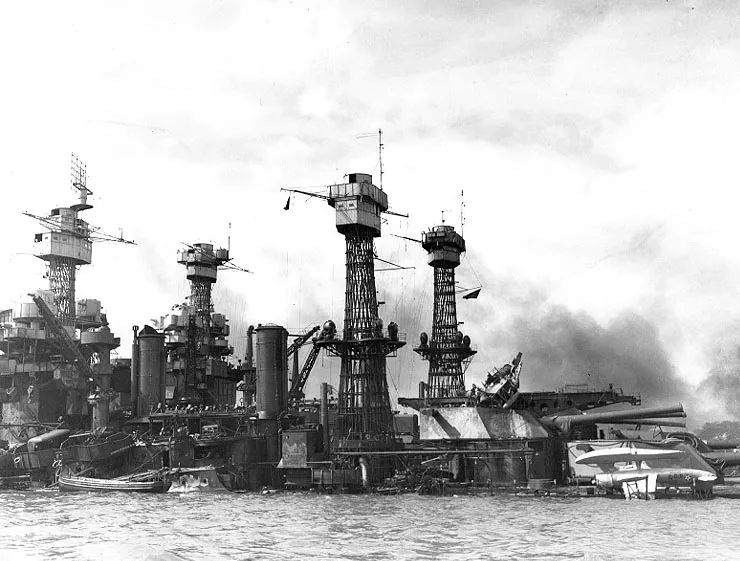
Photo: USN, Public domain, via Wikimedia Commons
On the afternoon of May 21, 1944, West Loch was not a battlefield. It was a loading yard: a shallow, crowded mooring basin at Pearl Harbor where landing ships took on ammunition, fuel, and the ordinary freight of an amphibious operation. The Pacific War was moving fast, and the next major objective—Saipan—was already casting a long shadow over Hawaiian logistics. Then a series of explosions tore through the basin, turning a support area into a casualty scene and forcing the Navy to confront a quiet crisis in the middle of its own buildup.
For PacificWar Animated, West Loch is a case study in how animation can clarify what photographs and prose often obscure. The event was not a single blast but a sequence: an initial detonation, a spreading fire, and then repeated explosions as neighboring vessels were engulfed. Reconstructing that sequence frame by frame shows why the disaster was so costly—and why the cleanup became a race against the calendar.
A Harbor Under Wartime Pressure
By spring 1944, Pearl Harbor was less a single base than an industrial organism. Repair yards, ammunition depots, fuel farms, and training areas all fed the Central Pacific drive. West Loch served as a staging area for landing ships and their cargo, including LSTs—Landing Ship, Tank—the ungainly but indispensable vessels that carried tanks, trucks, troops, and supplies directly onto invasion beaches.
Loading an LST was dangerous work even without combat. Ammunition, gasoline, and pyrotechnics shared space with vehicles and personnel. Safety depended on spacing, discipline, and the assumption that a mistake in one hold would not become a catastrophe across an entire basin. At West Loch, that assumption failed.
The first explosion is generally associated with LST-353 during ammunition handling. Within minutes, fire and blast effects spread to nearby LSTs. The exact chain of events has been debated, but the broad pattern is not: mooring congestion, combustible cargo, and the physics of sympathetic detonation combined with deadly effect. More than 160 sailors and others were killed, and nearly 400 were injured. Six LSTs were lost or wrecked, and additional vessels were damaged.
The Sequence, Drawn Out
An animated sequence diagram is useful here because the disaster unfolded as a spatial problem. A single map can show where the LSTs were moored; a timed sequence can show how fire and explosions moved from one hull to the next. The animation would not substitute for archival evidence, but it can make the relationship between spacing, cargo, and time legible to viewers who have never walked a wartime mooring basin.
The key visual question is not only “What exploded?” but “Why did the explosion travel?” West Loch was a dense environment. Ships were packed together, and the cargo they carried was designed to be destructive on a beachhead. When one vessel’s hold detonated, the blast and fire had ready pathways to neighboring ships and to the crews working around them. The result was a chain reaction that overwhelmed immediate firefighting and rescue efforts.
That distinction matters for the historical record. The West Loch disaster was not a failure of courage under fire; it was a failure of margin in a support setting. The men on the scene fought fires, moved injured shipmates, and tried to separate vessels under conditions that were rapidly becoming unsurvivable. Animation can honor that human response by showing how little time and space they had.
The Human Ledger
The casualty figures are often reduced to a line in a table, but West Loch was a human event before it was a logistical one. The dead and wounded included sailors and others engaged in the unglamorous work that made amphibious warfare possible. Their names are scattered across archival records, casualty reports, and local memory rather than fixed in the public narrative of the Pacific War.
That obscurity is part of the story. The disaster occurred during a period of intense operational security. Wartime censorship kept it out of contemporary newspapers, and official acknowledgment came only years later. For families, that silence could be its own burden. For historians, it left a record that must be assembled from multiple sources: deck logs, damage reports, salvage records, and survivors’ accounts.
Censorship and the Quiet Cost
The secrecy surrounding West Loch was not unusual by the standards of 1944, but its effect was distinctive. The Pacific War’s public narrative emphasized preparation, resolve, and momentum. A major accidental explosion at Pearl Harbor—the same harbor attacked in 1941—did not fit that narrative. Keeping it quiet protected operational information and avoided giving Japan a propaganda opening, but it also delayed public understanding of the accident’s scale.
For a modern audience, the censorship is a reminder that wartime information control was not only about denying facts to the enemy. It also shaped what Americans at home could know about the risks taken on their behalf. West Loch was a secret cost of Saipan, but it was also a secret cost of the broader amphibious campaign: the ships, cargo, and lives consumed before the first assault wave touched the beach.
The Race to Saipan
The timing of the disaster made it strategically significant. The Saipan operation, Operation Forager, was scheduled for June 15, 1944. West Loch destroyed landing ships and ammunition at precisely the moment when the Central Pacific force could least afford losses. The cleanup and salvage effort became a race not only to recover the basin but to preserve the invasion timetable.
Navy divers, salvage crews, and construction units worked under difficult conditions. Damaged vessels had to be moved or secured; unexploded ordnance had to be cleared; the basin had to be made usable again. Replacement shipping and cargo had to be found. The public record of the Pacific War often emphasizes the assault phase, but West Loch shows the hidden fragility of the support phase. An operation can be delayed or altered by an accident far from the enemy.
The Saipan landings went forward on schedule. That fact can obscure the closeness of the margin. The system absorbed the shock, but it did so through urgent improvisation and hard labor. Animation can make that margin visible by juxtaposing the calendar of the invasion with the slow, dangerous work of salvage in West Loch.
What the Animation Can and Cannot Show
A responsible animated reconstruction should be clear about its limits. It can show the mooring layout, the sequence of explosions, and the spread of damage based on archival records. It cannot invent conversations, assign blame beyond the evidence, or pretend to know precisely what every crew member saw. The value of the format is explanatory, not sensational.
West Loch deserves that care. It is a lesser-known chapter of the Pacific War, but it is not a minor one. It reveals how the American amphibious machine depended on crowded harbors, dangerous cargo, and rushed schedules—and how a single accident could threaten an operation that history remembers mainly for its beaches.
On May 21, 1944, West Loch blew twice in the sense that the first explosion was followed by others, each one widening the damage and deepening the cost. The harbor recovered, the operation proceeded, and the story stayed quiet. An animated autopsy can finally give that afternoon the attention it was denied at the time.