The Raid That Counted Rescued Lives: Animating Cabanatuan
Photo: Army Signal Corps photographer LT. Stephen E. Korpanty; restored by Adam Cuerden, Public domain, via Wikimedia Commons
Most Pacific War stories are told in terrain gained: a ridge, an airfield, a harbor. The raid on Cabanatuan prison camp on the night of January 30, 1945, resists that grammar. Its objective was not ground but people—more than 500 American and Allied prisoners held behind Japanese lines on Luzon. For PacificWar Animated, it is a natural subject for reconstruction, because the raid’s brilliance lay less in firepower than in timing, local knowledge, and the refusal to accept that liberation would arrive too late.
A Different Kind of Objective
By late January 1945, U.S. forces were closing on Manila, and the Japanese grip on Luzon was breaking. For prisoners at Cabanatuan, that advance carried a terrible ambiguity. Reports of the Palawan massacre in December 1944 had shown that retreating Japanese guards might kill prisoners rather than let them be liberated. The men at Cabanatuan were weak from years of hunger and disease. Many could not walk far, let alone fight. The mission to reach them fell to the 6th Ranger Battalion, supported by Alamo Scouts and Filipino guerrillas. Their task was not to hold the camp or destroy a Japanese garrison. It was to get in, get the prisoners out, and disappear before the enemy could respond.
That distinction matters. A conventional battle animation follows lines of advance and objectives seized. A rescue animation follows a clock. The plan had to solve two problems at once: reach the camp undetected and move weakened men out before Japanese reinforcements could close the roads.
Intelligence Made the Raid Possible
The raid worked because it was rehearsed in information before it was executed in motion. Alamo Scouts reconnoitered the camp and surrounding approaches. Filipino guerrillas under Capt. Juan Pajota and Capt. Eduardo Joson provided local knowledge, security, and blocking forces. Civilian networks supplied details about guard routines and terrain. This was not incidental support. It was the difference between a brave gamble and a workable plan.
Animation can show what a map alone cannot: the flat rice fields that offered little cover, the dry riverbed that helped conceal the approach, the camp’s hut layout, the guard positions, and the distances that made silence a form of armor. When viewers see the Rangers crawling across open ground, the vulnerability becomes spatial rather than abstract. The rescue depended on dozens of small judgments about where a man could lie still, when a guard might look away, and how long the force could remain exposed before surprise evaporated.
The Timeline Inside the Timeline
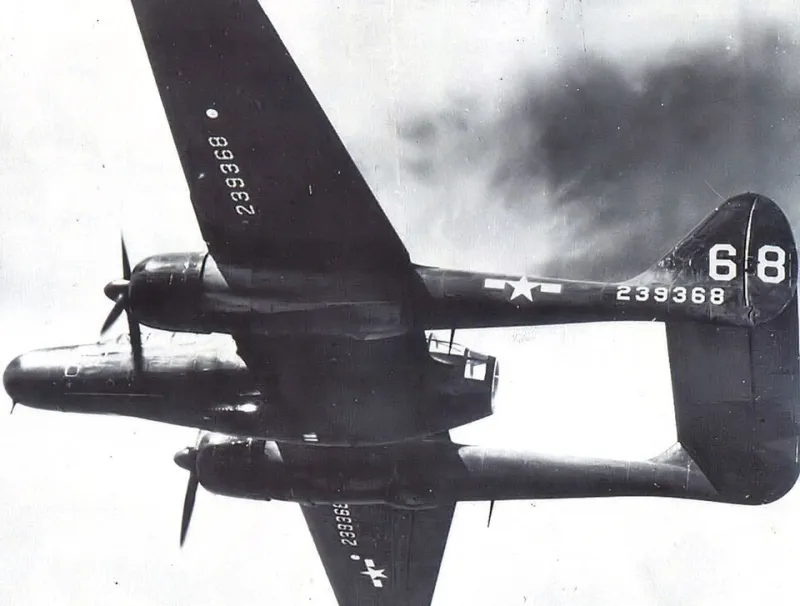
The assault itself was compressed. A U.S. aircraft—a P-61 Black Widow—flew over the camp in a staged diversion, drawing attention upward while the Rangers closed the final distance. The shooting phase lasted roughly half an hour. Rangers broke into the camp, overwhelmed the guards before they could organize a coherent defense, and began the harder work of evacuation.
That evacuation is where the raid’s true difficulty becomes clear. Prisoners were carried, guided, and sometimes literally lifted by men who had trained for combat but now had to move human beings who had barely enough strength to stand. Filipino guerrillas held blocking positions and helped shield the column. The shooting was brief; the withdrawal was long, exposed, and dependent on discipline. In an animated timeline, the most dramatic sequence is not the first burst of fire but the minutes after it, when the raiders had to convert surprise into distance.
Deception Was a Weapon
Cabanatuan is often remembered for its speed, but speed was only one part of the design. Deception shaped the approach. The diversionary aircraft pulled Japanese eyes away from the ground. The Rangers held fire until the last possible moment. The guerrillas’ roadblocks and ambush positions discouraged pursuit. Local civilians fed, guided, and concealed the force. Each element reduced the chance that a single mistake would turn a rescue into a massacre.
This is why the raid rewards close tactical reconstruction. It was not a set-piece battle but a choreography of small decisions: the Scout sketches, the guerrilla roadblocks, the aircraft pass, the discipline of men who had to cross a dangerous open field without firing a shot. The raid’s success was cumulative. Remove one piece—the intelligence, the blocking forces, the diversion, the restraint—and the odds change sharply.
Why This Story Belongs in Animation
Animation is well suited to Cabanatuan because the story is about relationships in space and time: where the guards were, where the Rangers crossed, where the prisoners waited, where the guerrillas stood, and how quickly each element had to move. A minute-by-minute reconstruction can make the raid legible without turning it into spectacle. It can also correct a memory problem. Popular retellings often prefer the raid as a shoot-’em-up, but the more remarkable story is a rescue in which the most important metric was not enemy dead but prisoners alive.
That emphasis does not diminish the raiders’ courage. It clarifies it. The men who entered Cabanatuan were not fighting for a hill or a beachhead. They were fighting to prevent a massacre and to bring home men whose war had already lasted too long.
The Victory That Was Counted in Lives
Cabanatuan deserves a larger place in how Americans remember the Pacific War. It shows that the war was not only a war of attrition but also a war of obligations. The raid did not shorten the campaign by itself. It did something more specific and more human: it turned a feared atrocity into a homecoming.
When an animated timeline reaches the moment the prisoners are led out of the camp, the screen should not linger on the guns. It should linger on the column—the Rangers, the Scouts, the guerrillas, and the weakened men they had come to save—moving through the dark toward safety. That is the victory Cabanatuan offers to memory: not ground taken, but lives counted and carried home.